Renaming Birds: Steller’s Eider

This dapper duck is a male Steller’s Eider (Polysticta stelleri), a bird that breeds in far north Arctic regions and winters in what, to our way of thinking, are locations that are just as chilly (Aleutian Islands, northern Scandinavia, and the like).

This species is named after Georg Wilhelm Steller, a physician, naturalist, and explorer who introduced Western scientists to a variety of animals (and also endured a shipwreck and survived months on an island now called Bering Island while saving fellow crew members from dying of scurvy).

Male Steller’s Eider photographed by Ron Knight, Wiki Commons image

Steller had a menagerie of animals named after him in addition to this sea duck: a jay, a sea eagle, a sea lion, a sculpin, and a sea cow, and that’s just the ones in which he appears in common names. (Sadly, the Steller’s sea cow was hunted to extinction within a few decades of its being described by Steller.)

But with eponymous bird names giving way to new titles, what could the Steller’s Eider be called instead?

Well, the Finnish people have a word for it that actually reflects a modern supposition about the species’ genetics: Allihaahka (alli is “Long-Tailed Duck,” haahka is “eider”). According to one study, Steller’s Eider may be a species that evolved via “hybrid speciation,” a long-ago “gene flow” between two different kinds of birds. But it seems unlikely this name would catch on in North America. Nor would its German name, Scheckente, “piebald duck,” referring to its bold black and white markings (which reflects its scientific name, too: polustiktos means “many spotted” in Greek).

This eider is known as a “soldier duck” in Alaska for its habit of swimming in single file, but the name that really stands out in literature about the far north is the Inupiat name Igniquaqtuq. This name is inspired by the golden sheen on the duck’s belly and breast and is translated variously as “the duck that sat in the campfire,” “duck that sat in fire,” and “the bird who travels with fire” (this site has wonderful information about indigenous names for birds). And so this sea duck could glory in the terrific rhyming name Fire Eider.

It would be in good company with other birds whose markings gave rise to legends involving fire. In Iroquois lore, for example, the American Robin once had a pure white breast, but because it saved a man from freezing to death by carrying a live coal and kindling to start a campfire and then tended it by fanning it with its wings, its feathers first became spotted and then turned rusty red–a wonderful summary of the actual bird’s transition from a polka-dotted youngster to a red-breasted adult.

Likewise, in European lore, the European Robin fanned embers to warm the baby Jesus and thus burned its feathers forever red. (In another story, the red is a bloodstain caused by the bird’s efforts to pluck merciless thorns from Jesus’s crown on Golgotha.)

None of the other eiders have eponymous names. One splendidly marked species bears the royal name King Eider, a goggle-faced species is aptly named Spectacled Eider, and the third is the Common Eider. The Common Eider in this photos appears to be giving some side-eye about being called “common.”

Common Eider photo courtesy WikiCommons (c) Mike Pennington.

Renaming the Birds: Ross’s Goose

As birders, bird lovers, and most people who have ever seen a bird know by now, the American Ornithological Society announced on November 1, 2023, that it will change the English common names of all North American birds who are named after people.

Ross’s Goose (courtesy Andrew C via Wikimedia Commons)

No matter how you feel about this decision, it’s still a rare opportunity to give these feathered friends of ours names that befit their appearance, behavior, history, and habitat. Indeed, many websites offered readers to join in the effort just for fun, asking them to suggest new names for these birds saddled with possessive ones. (Unofficially, of course, else the entire AOS bird list might read “Birdy McBirdface.”)

The history of folkloric names for birds is a topic that’s long fascinated me, so I’m going to make use of all the books I’ve collected on this topic to dredge up some of those old-timey names and offer them up for consideration. (Not that anyone’s asked me.)

So here we go, beginning at the top of the official AOS checklist with Ross’s Goose (Anser rossii).

Ross’s Goose, with caruncle. (courtesy Ken Billington via Wikimedia Commons)

Who’s Ross, for starters? He was a top-level fur trader for the Hudson Bay Company, but he was also a keen naturalist who supplied research and specimens to institutions such as the Smithsonian. And he sported an impressive set of muttonchops.

As for the goose itself, it is a bird about half the size of a Snow Goose, with sleek white feathers and black wingtips. (For an extra fee, you can order one in the rare color variation “blue morph,” a dark-gray version with a white head.)

This goose had plenty of names before an ornithologist, John Cassin, dubbed it Ross’s Goose in 1861. So today’s committee members could possibly choose one of them: Wavey.

According to Folk Names of Canadian Birds by W. L. McAtee (1956), wavey is derived from Cree, Chinook, and Ojibway names for the goose, which are all imitative of its call–a perfectly good way to name a bird. Long-ago ornithologists embellished this name with various adjectives:

  • Barking Wavey (listen to them online and yeah, they do sound like small dogs barking at times)
  • Lesser Wavey or Little Wavey (is there a Greater Wavey out there?)
  • Wart-nosed Wavey (Well, now, there’s no need to be insulting. This unfortunate name was slung at the goose because many adult birds have wartlike bumps at the base of the bill. They’re called “caruncles,” which sounds a bit like a kind of crunchy snack food. Caruncles with Cheez!)
  • Horned Wavey (This name also appears to refer to the aforementioned caruncles. I guess they can sometimes be pretty dramatic; a photographer on this site left a comment about seeing one with a caruncle that resembled a rhino’s horn.)
  • Scabby-nosed Wavey (OK, now that’s just plain mean. See: caruncles. By now I’m thinking the bird should just be called a Caruncle.)

Oh, and one more old-time name (again with the insults): Galoot (apparently due to the bird not being sufficiently wary of humans, but I bet that’s changed since it was “discovered” by European explorers).

Well, if the powers that be settle on wavey, perhaps they can come up with more flattering descriptors. I doubt the goose would mind being called, say, the Pink-legged Wavey.

Barn Swallows and Valentines

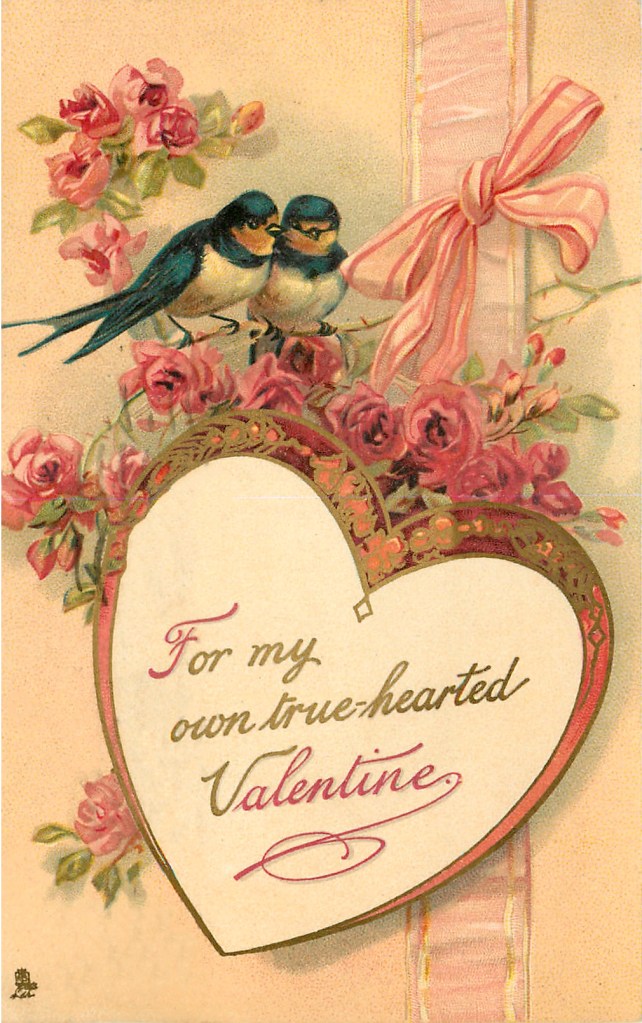
It’s Valentine’s Day, and along with flowers and chocolates, birds of various species flutter charmingly across many Valentine cards. Birds have long been associated with love.

During the Middle Ages, people in parts of Europe believed that birds began their courtship and breeding season on February 14. Geoffrey Chaucer immortalized this sentiment in “The Parliament of Fowls” when he wrote “For this was sent on Seynt Valentyne’s day / Whan every foul cometh ther to choose his mate.” (Forgive the spelling. This was written between 1372 and 1386, after all.)

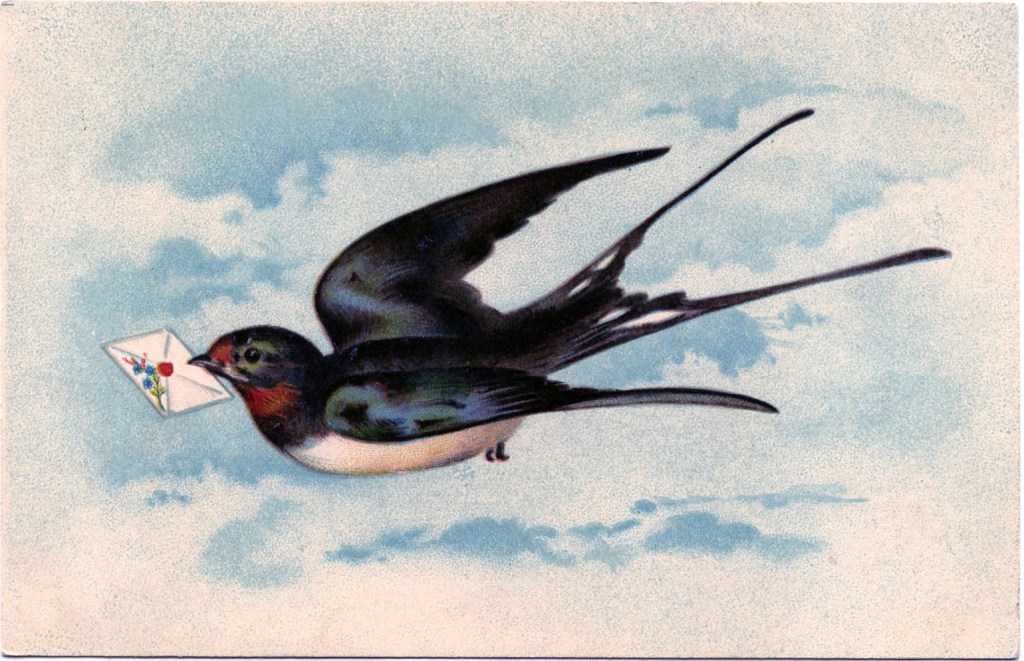
One bird frequently depicted on Valentine’s Day cards is the barn swallow. Swallows, which are migratory, have long served as harbingers of spring–they return to their breeding grounds just as this season of renewal unfolds. The ancient Greeks linked swallows with Aphrodite, the goddess of love. Swallows have also been credited with bearing departed souls on their slender wings. And their long-distance flights, agility, and swiftness make them the perfect messengers for carrying tokens of affection to loved ones.

Since an adult swallow barely outweighs a first-class letter, I chose not to send any Valentines by barn-swallow post, so I’ll just wish you a happy Valentine’s Day here. And tomorrow, February 15, marks a one-month countdown to the publication of my book about barn swallows, Swallows Swirl (illustrated by Jess Mason and published by Sleeping Bear Press). I’m quite thrilled about that!