
Feathers are flying now that the American Ornithological Society has decided to rename all bird species in the Americas that are named after people. The main reason for this decision is to eradicate names of people with racist or colonial associations. It paves the way for the creation of new names that focus on the birds themselves.
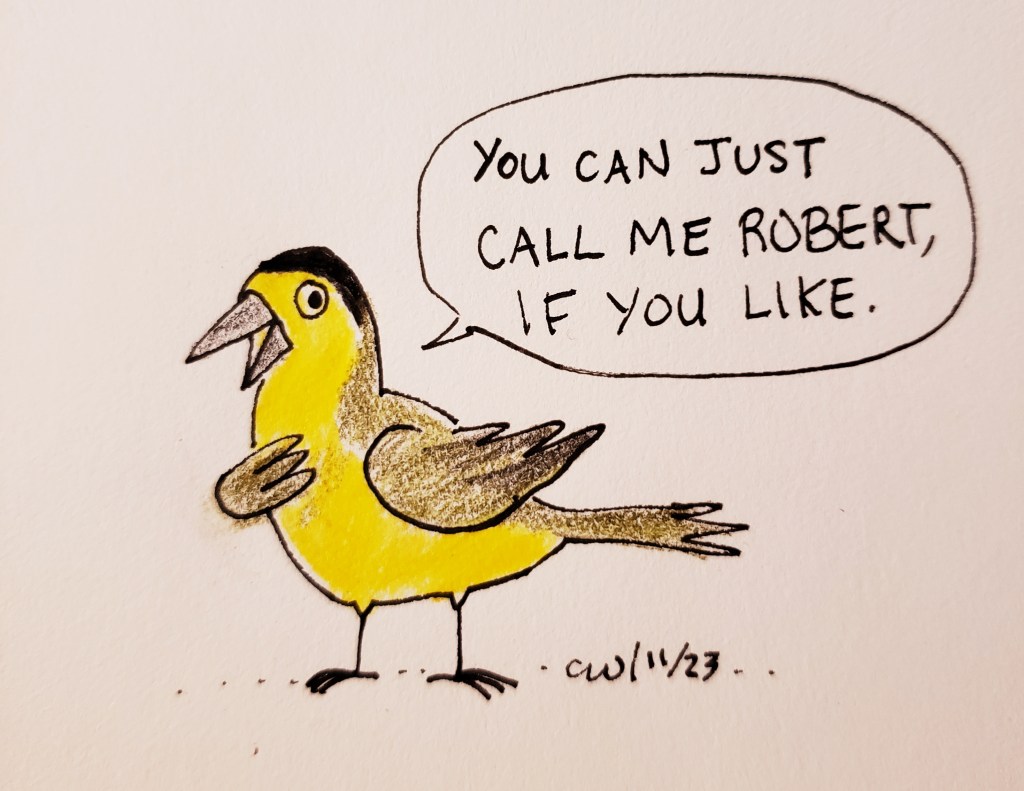
I’ve always idly thought I’d love to have a job naming racehorses or paint colors, so I’m interested in seeing what the AOS comes up with. (If they put votes out to the public, I hope they take care not to repeat the actions of the British agency that enlisted the public in naming a research vessel back in 2016, or we’ll end up with a lot of birds being called Birdy McBirdface.)
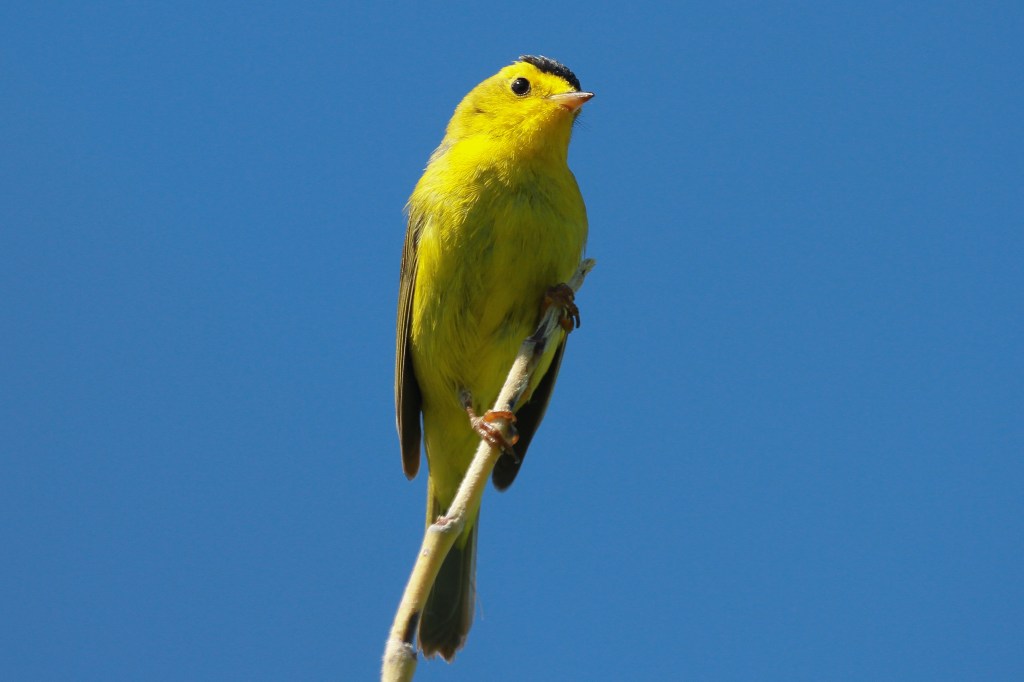
The bird enlisted in many articles to showcase the changes to come is the Wilson’s warbler, Cardellina pusilla, a lively little bird clad in bright yellow and olive green. The male sports a jaunty black cap, the female a paler version that is typically olive.
What to call this sprite?
It’s not like its name hasn’t changed in the past. For a start, its scientific name wasn’t always Cardellina pusilla. (Cardellina derives from an Italian word that refers to the European goldfinch, and pusilla is Latin for “very small.”) Naturalist Alexander Wilson, who first described the bird scientifically in 1811, called it Muscicapa pusilla (Muscicapa translates to “flycatcher”).
The bird was subsequently shuffled between genera for the next few decades until it became Wilsonia pusilla in 1899. And there it perched until another relocation in 2011 put it into the genus Cardellina. A lot of other warblers also found themselves alighting in new genera at that time–you can read about that here.
But the warbler doesn’t stand on ceremony, so it’s not going to insist you call it by its scientific name. Wilson himself called it the “green black-capt flycatcher.” Many people in online comment sections suggest “black-capped yellow warbler,” though some point out that this name sidelines the female bird (a tendency that’s not unusual in common bird names).
Past common names for this species aren’t exactly an exciting treasure trove of monikers: green black-capped warbler, Wilson’s blackcap, Wilson’s black-capped flycatching warbler (a lot of name to stick to a bird that weighs 0.4 ounces, or less than an empty soda can), and golden pileolated warbler (pileolated being a schmancy word for “crested”).
Well, Wilson’s Warbler, one can only hope great things are in store for you with your new name. Maybe the official name-granters will channel the imagination and zest of whoever named the hummingbirds. Some hummers are named after people, but most of them flaunt dazzling, descriptive names: Amethyst Woodstar, Black-billed Streamertail, Green-Backed Firecrown, Turquoise-Throated Puffleg, Booted Racket-Tail, and Spangled Coquette, just to name a few.

 Christina Wilsdon
Just a small step to make it Wilsdon’s warbler.
LikeLike
I noticed that but decided out of great modesty not to suggest it 😀 …though if they did call it that, for some bizarre reason, it’d end up being spelled Wildson’s warbler and Winsdon’s warbler and Williston’s warbler…ask me how I know!
LikeLike